
How to Prevent Frozen Pipes in Sioux Falls, SD
To prevent frozen pipes in Sioux Falls, shut off and drain your outdoor faucets and sprinkler line before the hard cold sets in, insulate and air-seal the pipes that run near outside walls, and keep water moving through at-risk lines on the coldest nights. Most pipes that freeze here are on an outside wall, in a garage, or at the spot where the water line comes into the basement. Fix those few places and you take care of most of the risk.
Beyond the usual tips, this guide covers frost-free faucets that still freeze, sprinkler backflow valves, the basement spot where your meter sits, and which protection fits which pipe.
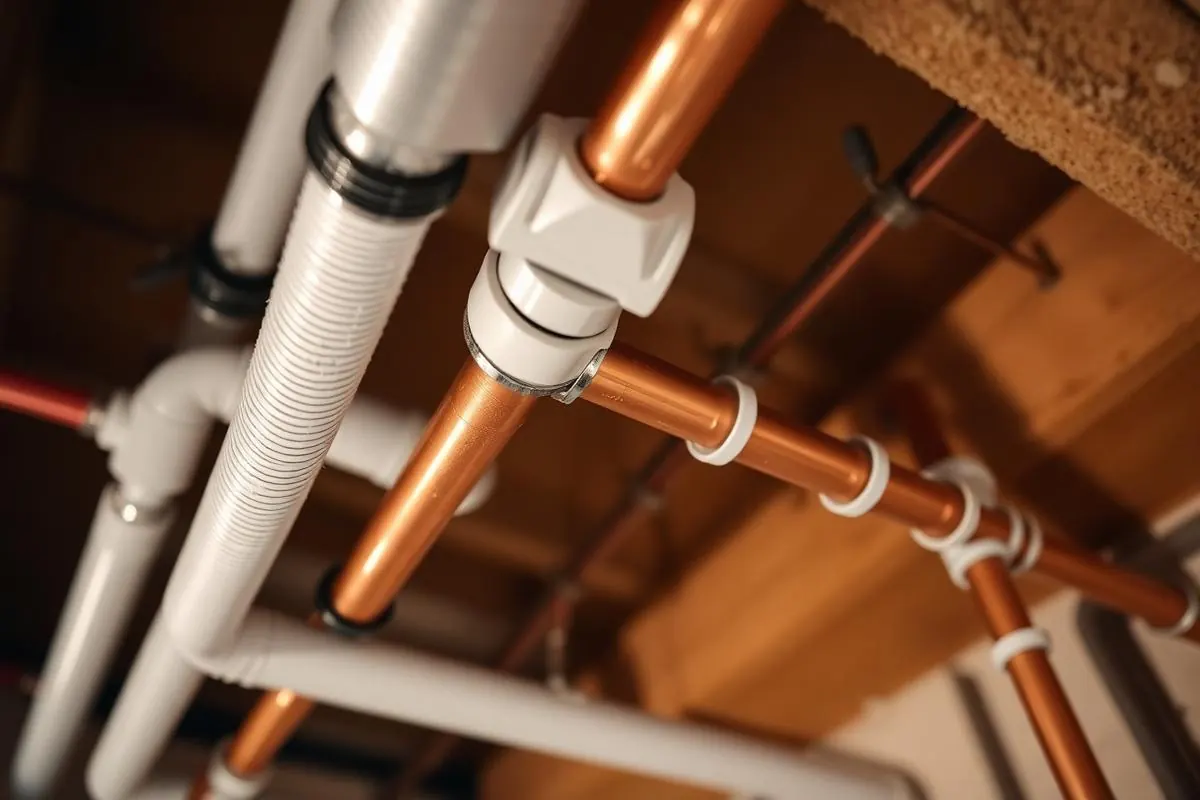
Why pipes burst (and why dripping works)
Research from the University of Illinois Building Research Council found that the ice itself usually isn't what splits the pipe. Once an ice plug forms, water trapped between the ice and a closed faucet builds up pressure, and that pressure bursts the pipe, often in a spot that never froze. A dripping faucet gives the pressure somewhere to go.
Where pipes freeze in Sioux Falls homes
- Outdoor faucets (sillcocks) and the short pipe feeding them. These usually freeze first.
- The rim joist area of the basement, where the floor framing sits on the foundation. Pipes that run along it are close to outdoor air.
- Where the water service comes in. The City of Sioux Falls puts water meters inside homes so they don't freeze, usually in the basement near where the service line enters. A drafty foundation gap or a basement window near that spot puts the meter and main valve at risk.
- Sinks on outside walls, and lines in garages, crawl spaces, or over unheated rooms.
- Lawn sprinkler lines and their backflow preventer.
Under Sioux Falls city code (§ 59.002), the property owner is responsible for the water service line from the city's curb shutoff to the house. That includes the meter shutoff valves and the backflow assembly, and keeping them protected from freezing. So a frozen service line or meter valve on your side is your repair to pay for, not the city's.
Fall steps, in order
- Find your main shutoff and test it. It's usually next to the meter in the basement. Turn it off and back on. If it's stuck or drips, get it fixed now, not during a burst.
- Take off every hose, splitter, and timer from the outdoor faucets. A hose left on traps water in the faucet, even in a frost-free one.
- Close the indoor shutoff valve for each outdoor faucet. In newer homes these are often near the main valve. In older homes, look along the basement ceiling close to the outside wall.
- Open the outdoor faucet to let the water drain out. Then open the small bleeder cap on the indoor valve (with a bucket under it) to drain the rest. Close the cap and leave the outdoor faucet open for the winter.
- Drain the vacuum breaker if your outdoor faucet has one (the bump on top where the hose attaches). These can hold enough water to crack. Most have a small plastic post or ring you push or pull to let it drain.
- Winterize the lawn sprinkler system, including the backflow preventer outside the house. Follow the system maker's or installer's directions. Don't put antifreeze in these lines unless the directions call for it.
- Seal air leaks near pipes: gaps around the rim joist, where lines and wires pass through walls, and around basement windows near plumbing. On a windy night, a small gap can freeze a pipe that's fine on a still night.
- Insulate exposed pipes in the garage, crawl space, rim joist area, and under outside-wall sinks. Do both hot and cold lines.
Which protection fits which pipe
| Option | Best for | Limits | Notes |
|---|---|---|---|
| Foam pipe sleeves | Exposed basement, garage, and crawl space runs | Slows heat loss but doesn't add heat. A pipe can still freeze in a long, deep cold stretch. | Cheapest first step. Fit the sleeve to the pipe size and tape the seams. |
| Air sealing (caulk, foam, rim joist insulation) | Pipes along outside walls and rim joists | Doesn't help pipes in a fully unheated space | Often fixes the real cause: cold air blowing on the pipe. |
| Heat cable / heat tape | A run you can't keep warm, like a garage line or crawl space | Needs a nearby outlet and careful installation | Use only UL-listed products made for that use, and follow the maker's instructions exactly. Some types must never overlap or be covered. |
| Dripping a faucet | Cold-snap nights for pipes on outside walls | Uses some water and only protects the line that feeds that faucet | Relieves the pressure that bursts pipes. |
| Moving the pipe | A run that has frozen more than once | Bigger job, may involve opening walls | The lasting fix when a pipe sits in a cold cavity. |
Cold-night checklist
Use this when the forecast shows a deep cold snap or strong wind:
- Open the cabinet doors under kitchen and bathroom sinks on outside walls. Move cleaners out of reach of kids and pets.
- Let a thin drip run from faucets fed by at-risk pipes. On a single-handle faucet, set the handle to the middle so hot and cold both move.
- Keep the garage door closed if any water lines run through the garage.
- Keep the house at a steady temperature day and night. Skip the overnight setback during a cold snap.
- Before bed and when you get up, check that water flows normally at the faucets most likely to freeze. A weak trickle is the first warning.
- Make sure everyone at home knows where the main shutoff is.
Leaving town in winter
The American Red Cross says to leave the heat on and set no lower than 55°F while you're away. Also:
- Ask someone to check the house daily, and check your homeowners policy for any rules about vacant homes.
- Put a battery-powered leak alarm on the basement floor near the water heater and the main valve.
- For a long trip or an empty house, think about shutting off the main water valve and draining the lines. If your home has a fire sprinkler system, shutting off the water also shuts off the sprinklers, so check with the sprinkler installer first.
If a pipe freezes anyway
If a faucet gives only a trickle, leave it open and gently warm the pipe with a hair dryer, starting at the faucet end and working back. Never use a torch or open flame. If you can't find the frozen spot, can't reach it, or see water, shut off the main and call. Our burst and frozen pipe repair page explains how a frozen line is found, thawed, and fixed. An outdoor faucet that froze may not show damage until you first turn it on in spring, so watch the basement wall behind it the first time you use it. A slow leak inside a wall is a job for leak detection and repair.
Frequently asked questions
Water freezes at 32°F. In University of Illinois research, uninsulated pipes in an unheated attic started freezing when it was about 20°F outside. Wind, drafts, and missing insulation make pipes freeze sooner, so on long, windy subzero stretches, act early.
Drip the faucet fed by the pipe most at risk. On a single-handle faucet, set it to the middle so both lines move. The goal is to relieve pressure behind any ice, so a thin, steady drip is enough.
Yes. A frost-free faucet only drains if it was installed with a slight downward slope and no hose is attached. A hose left on, or a faucet that slopes the wrong way, traps water that can freeze and split the faucet inside the wall.
Under city code § 59.002, the property owner owns and maintains the line from the city's curb shutoff to the house, including the meter shutoff valves and backflow assembly. That includes protecting them from freezing, so those repairs are the owner's cost.
Shut off the main water valve, then open the lowest faucets to drain the pressure. If water is near outlets or the electrical panel, keep away and shut off power to that area if you can do it safely. Then call a plumber.
Need help before the next cold snap?
If a pipe in your home has frozen before, or you have a stuck shutoff or an outdoor faucet that leaked last spring, call Sioux Falls Plumbers at 605-250-6993. We'll explain what we find and what it will take before any work starts. Calls are answered 24/7 for emergency plumbing across Sioux Falls and nearby towns.
Sources: University of Illinois Building Research Council, "An Investigation into Freezing and Bursting Water Pipes in Residential Construction" (IDEALS); American Red Cross, Preventing & Thawing Frozen Pipes; City of Sioux Falls, Water Meters page; Sioux Falls Code of Ordinances § 59.002; Structure Tech Home Inspections, "How to winterize your outside faucets."